Saturday, 30 May 2026Vol. III · Issue 47
Est. 2021 · IndependentFortnightly · Free to Read

TacticsPage

Featured Analysis

Why Enzo Maresca's Left-Sided Overload Is Rewriting the Half-Space Playbook

Chelsea's positional structure in transition has become the most discussed tactical system in the Premier League. We spent three weeks charting every third-man run.

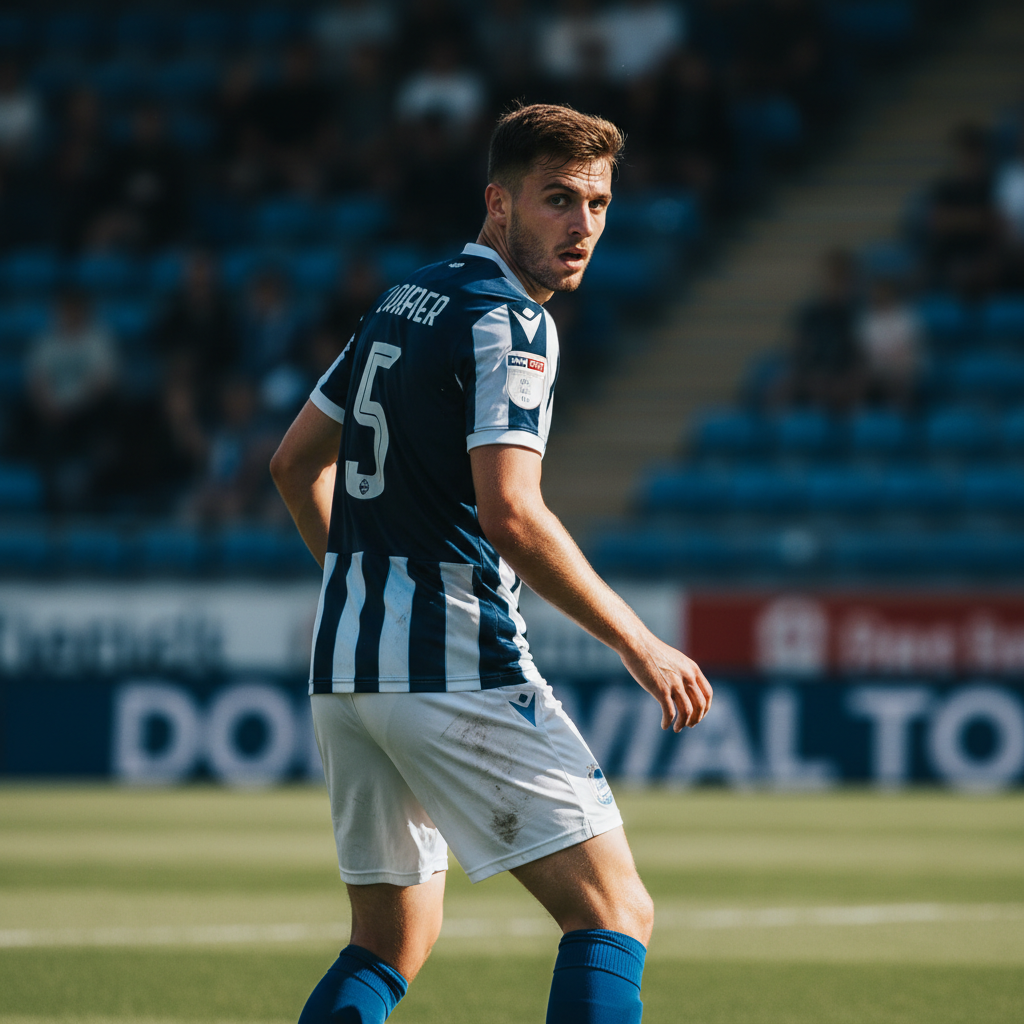
Footballer checking shoulder before receiving pass — a moment of tactical awareness frozen mid-movement

Tactical Moment

"The shoulder check before the pass — everything begins here."

Stamford Bridge, Feb 2026

Current Issue

Long Reads

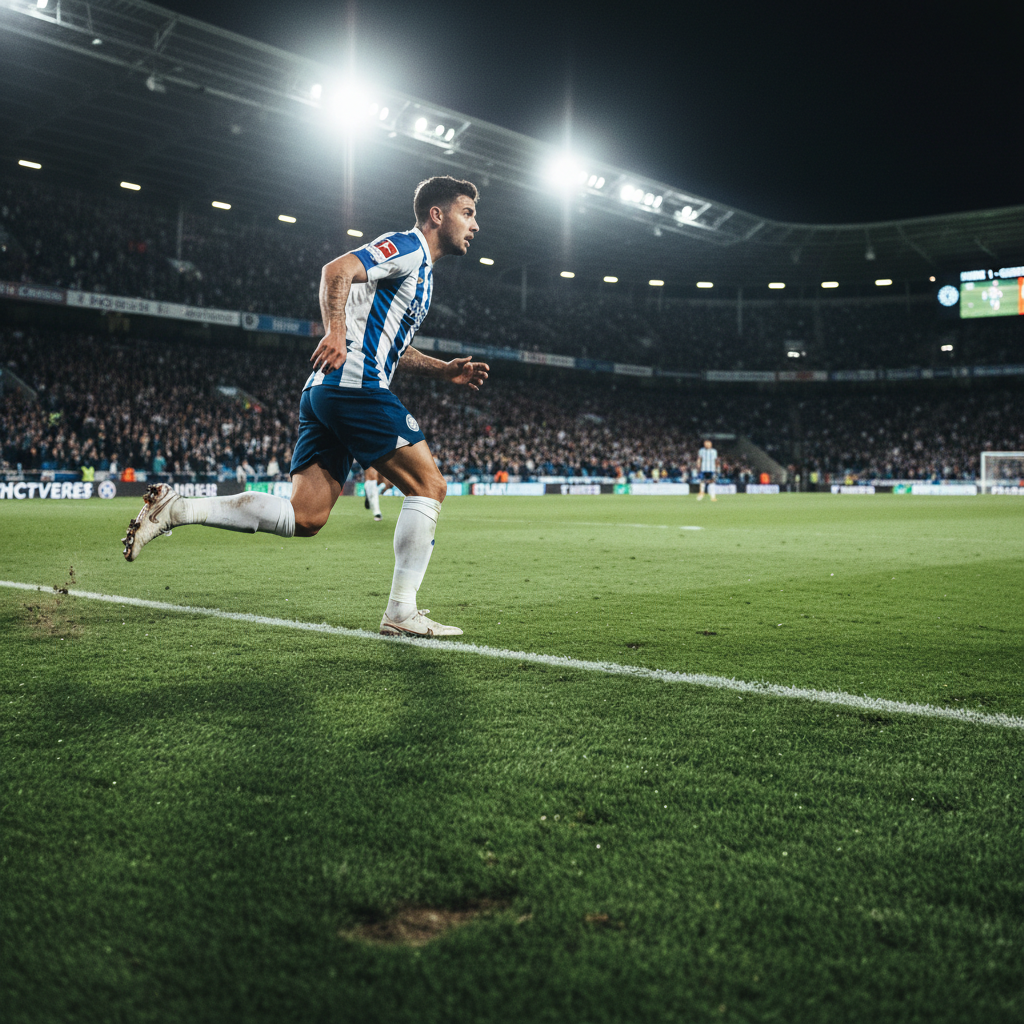
Footballer in full sprint along the flank, body angled to receive a diagonal pass during a night match under floodlights
01
Long Read · Tactics·24 Feb 2026

The 4-3-3 Is Not Dead. It Just Moved to the Right Back.

How modern full-back play has quietly restructured the most familiar formation in football

There is a moment in Liverpool's 3-1 win over Brentford in January that most broadcasters missed entirely. Trent Alexander-Arnold had drifted into a central position — a deliberate, coached movement — and the camera had already panned to track the ball. What remained off-screen was the question that would define the next decade of football tactics: what exactly is a full-back now?

The answer, if you spend enough time with the positional data from the last three Premier League seasons, is that the full-back has become the most intellectually demanding role on the pitch. Not the most physically demanding — that remains the pressing midfielder, the one who covers 13.4 kilometres in ninety minutes and still finds the energy to press a centre-back at the eighty-third. Not the most technically demanding — that is almost certainly the deep-lying playmaker who must receive under pressure in tight spaces and immediately distribute with purpose. But the full-back must now be all of these things, in sequence, sometimes simultaneously, while also reading the defensive shape of the team they're leaving exposed behind them.

Pep Guardiola understood this before anyone else. When he first moved Philipp Lahm into midfield at Bayern Munich in 2013, the football world treated it as an eccentric experiment. It was, in retrospect, a glimpse of the position's future. The full-back was being asked a new question, and the teams that answered it first would dominate possession football for the next decade.

But here is where the analysis gets genuinely strange, and where I think most tactical commentary has been too conservative in its conclusions...

But here is where the analysis gets genuinely strange, and where I think most tactical commentary has been too conservative in its conclusions...

James Whitfield

Tactics Correspondent · 18 min

Continue Reading
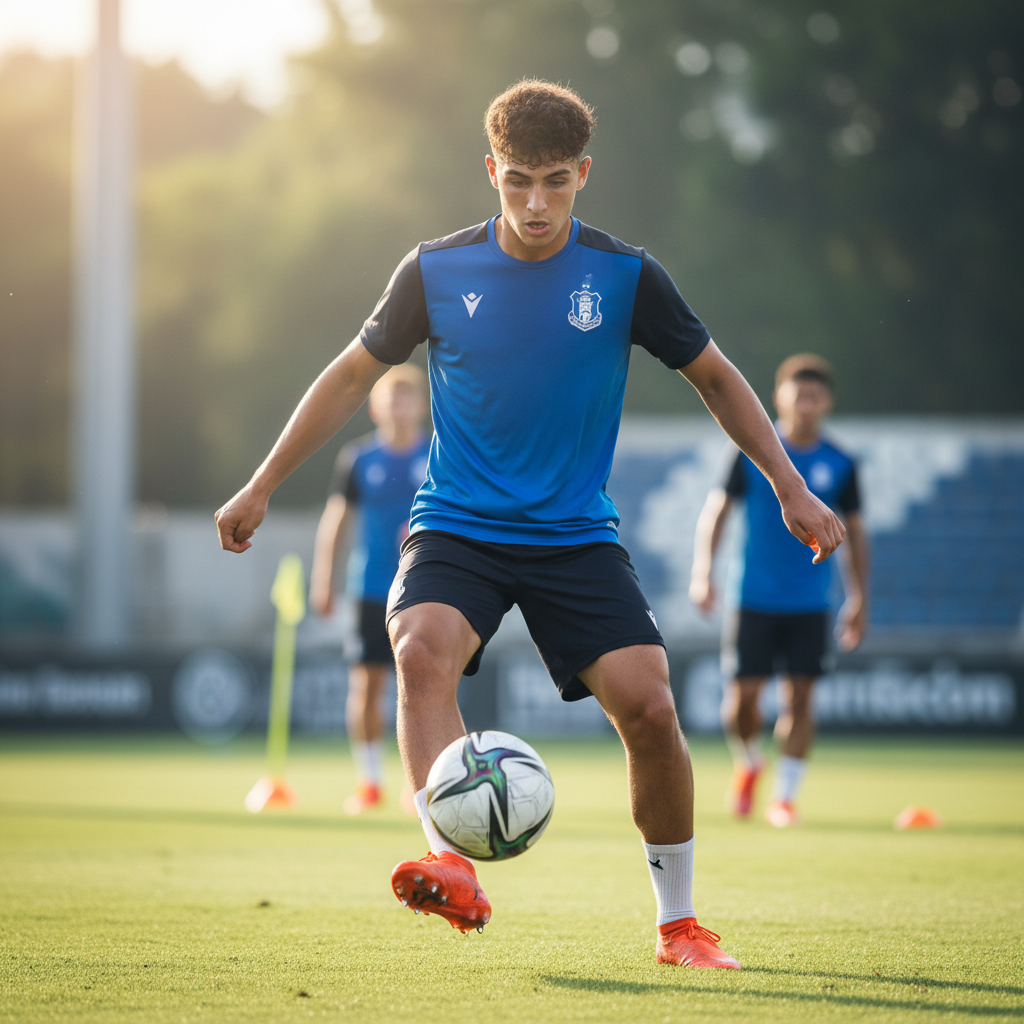
Young footballer in training, mid-turn with the ball, caught in the fraction of a second before the decision is made
02
Scouting · Deep Dive·19 Feb 2026

Alejandro Garnacho Doesn't Fit Your System. That's Exactly Why You Need Him.

A three-month scouting report on the player Premier League clubs can't agree on how to use

The first thing you notice when you watch Garnacho's heat maps from the 2024-25 season is that they don't make any sense. The clusters of activity are scattered across the left channel, the right half-space, occasionally deep in his own half — he appears, on paper, to be a player who either hasn't been coached or has been coached by someone who doesn't believe in positional discipline.

Neither interpretation is correct. What the heat maps are actually showing you is a player who has been given a very specific brief by his managers at different clubs: find space. Not 'occupy your designated zone.' Not 'maintain width.' Simply: find space, and use it before the defence reorganises.

This is a tactical instruction that sounds simple and is, in practice, extraordinarily difficult to execute consistently. Most wingers who receive it interpret it as permission to drift. Garnacho interprets it as an obligation to solve the game's hardest problem — the moment between defensive shape and defensive action, the half-second when the press has not yet been triggered and the covering run has not yet been made.

I have watched 67 of his club appearances from the last eighteen months. I have charted 312 individual movements off the ball — not with the ball, which is where most analysis begins and ends, but the runs he makes in the 89 minutes and 47 seconds of each match when he is not in possession. What I found rewrites, at least partially, the conventional wisdom about what kind of player he is.

The conventional wisdom says he is a luxury. An inconsistent luxury — brilliant in flashes, absent in others, the kind of player you build around only if you have everything else already in place. Three different managers have said variations of this publicly. Two of them were wrong in ways that are now clear from the data. The third was wrong for a more interesting reason...

The third was wrong for a more interesting reason...

Priya Nair

Scouting Editor · 14 min

Continue Reading
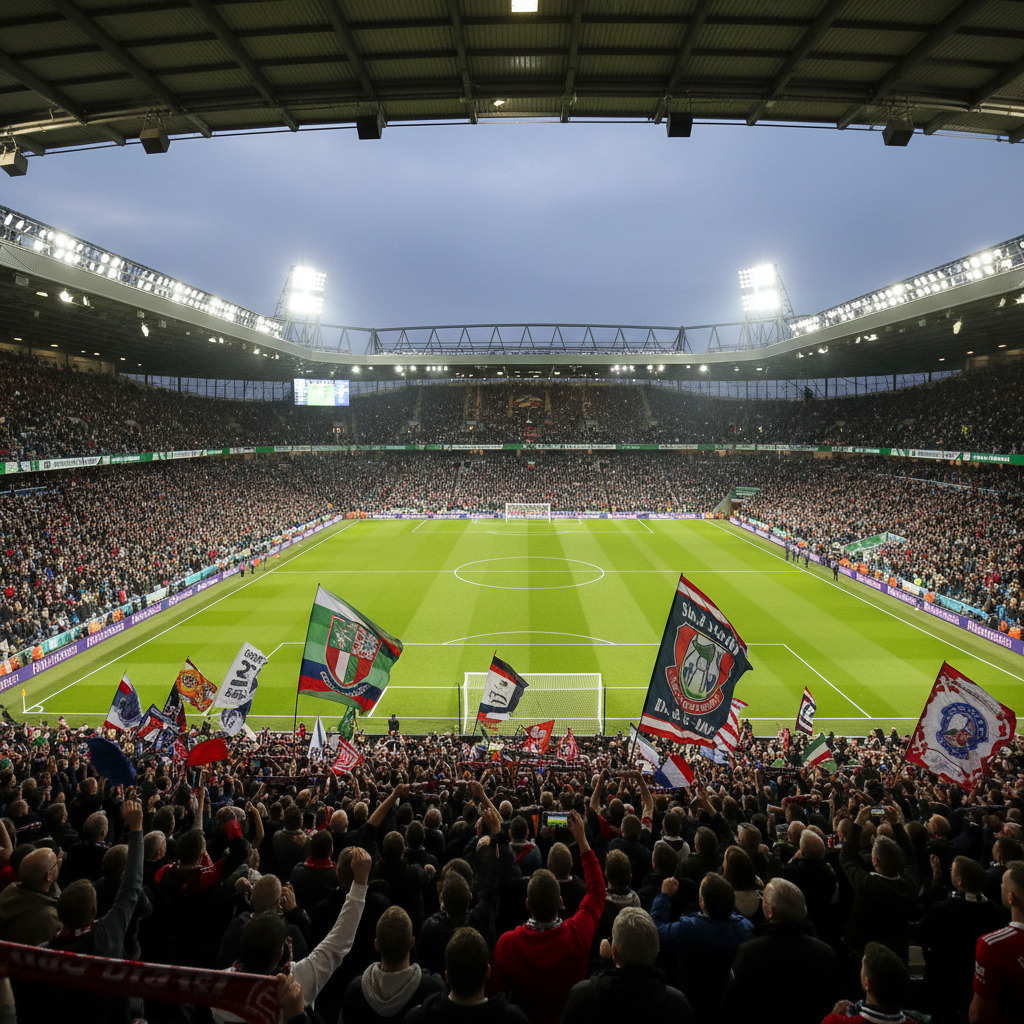
Packed football stadium at dusk, floodlights illuminating a sea of fans holding scarves aloft before kickoff
03
Cultural Essay·12 Feb 2026

Buenos Aires Has Two Clubs. Football Has Two Languages.

On Boca, River, and what the Superclásico tells us about the way cities hold their contradictions

My grandfather watched the 1986 Superclásico from a bar in La Boca with seventeen other men, none of whom he knew before that afternoon, all of whom he embraced like brothers before the second half. He described it to me once as the most alive he had ever felt in a public space — more than any election, any concert, any protest march. And he had attended all three of those things in a country where each of them carried genuine risk.

I think about this story whenever I try to explain to people who didn't grow up in Buenos Aires what the Superclásico actually means. It is not, as the travel guides suggest, simply a fierce local derby. It is not, as the sociologists suggest, merely an expression of class conflict — though the class geography of the two clubs is real and documented and still matters in ways that are too easily dismissed by people who have never lived it. It is something stranger and more essential than either of those descriptions captures.

The Superclásico is a recurring argument about what kind of city Buenos Aires is. Not was. Is. Present tense, every time the fixtures are announced, every time the squads are named, every time the bus routes from Palermo to Núñez are rerouted to manage the crowds. The city becomes, for approximately ninety minutes, a place that must decide which version of itself it believes in.

Boca Juniors represents — and I am aware of how reductive this sounds, and I will complicate it shortly — the city as port, as arrival, as the place where the boats came in from Genoa and Naples and later from the Levant and Eastern Europe, carrying people who had nothing and built something and whose grandchildren now fill La Bombonera and sing songs in a dialect that has been evolving for a hundred and twenty years.

River Plate represents the city as aspiration — the move from La Boca to Núñez that their founders made in 1923, which was and was not about money, which was and was not about class, and which the Boca supporters have never forgiven or forgotten, because in Buenos Aires the geography of ambition is something you carry in your body.

But here is what the simple version of this story always misses, and what I spent three weeks in Argentina last summer trying to understand properly...

But here is what the simple version of this story always misses, and what I spent three weeks in Argentina last summer trying to understand properly...

Mateo Villanueva

Culture & History · 22 min

Continue Reading

The Voices

Our Writers

Man with short dark hair in a light jacket, looking slightly off-camera in natural outdoor light
94pieces

James Whitfield

Tactics Correspondent

Premier League · Champions League · Positional Play

Former youth coach at Charlton Athletic. Has spent fifteen years watching football from the gantry and another ten trying to explain what he saw. His analysis of Guardiola's third-man combinations has been cited in three UEFA coaching manuals.

The press isn't about winning the ball. It's about making the other team's first pass the hardest thing they do all match.

Signature Piece

The High Line Is Lying to You

Why offside traps succeed less than we think, and what the data says about compactness instead

Read Full Piece
Woman with dark hair and warm expression, photographed in soft window light against a neutral background
67pieces

Priya Nair

Scouting Editor

La Liga · Bundesliga · Youth Football · Transfer Windows

Spent four years working in recruitment for a League One club before concluding that the most interesting players were the ones the algorithms couldn't explain. She writes the scouting reports that agents photocopy and pass around.

Every scout has a theory about what makes a player. Mine is that the best ones make the game smaller — they compress time and space by thinking faster than everyone else.

Signature Piece

The £8m Midfielder Nobody Bid For

A scouting report on a Ligue 2 player whose numbers are Premier League-ready but whose profile doesn't fit any existing template

Read Full Piece
Man with curly dark hair and a relaxed smile, photographed outdoors in warm afternoon light
52pieces

Mateo Villanueva

Culture & History

South American Football · Club Histories · Football & Identity

Born in Rosario. Grew up watching Newell's Old Boys with his father, who once shook hands with Marcelo Bielsa in a car park. Has been trying to write about that moment ever since — and everything that it meant about football, cities, and what we inherit.

Football is the only place where a city can argue with itself in public and still go home together.

Signature Piece

What Bielsa Taught a Whole Country About Losing

On the 2002 World Cup, the myth of total football, and why Argentina's failure was also its most honest moment

Read Full Piece

The Beats

What We Cover

Football players in a tight defensive shape, viewed from above showing formation structure
Tactics

340+

Tactical Reports

Formation Deep Dives

Every match week, we chart the positional structures that defined the weekend — not the results, the patterns.

Explore
Close-up of football boot striking ball cleanly, captured in sharp detail against blurred pitch background
FPL

47

GW Differentials

The Differential Hunter

Under-the-radar picks with ownership below 5% — the ones that win your mini-league in March.

Explore
Crowded stadium from above showing a sea of supporters under bright stadium lights at night
Culture

24

City Essays

The Cities That Football Built

From Dortmund's Ruhrgebiet to the terraces of Santiago — how football shapes urban identity.

Explore
Young footballer in training, receiving a pass and controlling the ball with precise technique
Scouting

180+

Players Profiled

The Uncharted Market

Liga MX, Eredivisie, and the Brazilian Série A — where the next generation is being overlooked.

Explore
Newsletter

12k

Weekly Readers

The Touchline

Every Friday morning. Tactics, transfers, and culture in under ten minutes.

Subscribe Free
Free Weekly Newsletter

The Touchline

Tactics, transfers, and culture every Friday.

One email. No noise. The week in football distilled into the ten minutes your commute deserves.

12,400

Weekly Readers

3 years

Published Weekly

Free

Always

No spam. Unsubscribe any Friday.

Last Friday's Issue

Tactics

Why Arsenal's high block is now more dangerous than their press

Transfer

The midfielder Dortmund quietly sold to a league nobody watches

Culture

On the death of the local derby and what we lose with it